A Great Smart Home Should Be Designed for Everyone Who Lives There
There's a phrase I hear during initial client meetings that I've learned to pay very close attention to.
Usually I'm sitting down with a couple and, a few minutes into the conversation, one person says something like:
"I'm not the technology person. You two can handle this."
Then they mentally check out of the conversation.
I understand why it happens. One person may be more interested in technology, know more about the products, or simply enjoy talking about it.
But from my perspective, it's one of the worst things that can happen during the design process.
Because both people are going to live in the house.
Both are going to use the lighting. Both need the Wi-Fi. Both might want to listen to music, watch television, entertain friends, work from home, adjust the temperature, or create privacy at the end of the day.
There shouldn't be a technology person in the family. There should be a home everyone feels confident using.
And that distinction influences almost everything about the way we design technology.
Luxury Is Confidence
We've talked before at Imagined Home Technology about the idea that luxury is confidence.
To me, few things undermine that feeling faster than standing in your own home and having to ask:
"How do I turn this on?"
That doesn't mean a sophisticated home should require absolutely no instruction. That's probably unrealistic. There may be things we need to show a homeowner, and more advanced features may take a little time to learn.
But the basics should feel intuitive.
Turning on the lights shouldn't be intimidating.
Watching television shouldn't require instructions every time.
Putting music on shouldn't feel like operating professional audio equipment.
And someone shouldn't worry that pressing the wrong button is going to break something.
Every successful interaction with the home should build a little more confidence.
Eventually, people stop thinking about the system and simply start using their home.
There Doesn't Need to Be One "Right" Way
One of the mistakes I think we can make when designing smart homes is assuming everyone should interact with technology the same way.
I don't mind giving people multiple paths to the same outcome.
One person may love using an app.
Someone else might prefer a physical keypad.
Another person uses a remote.
Someone might say a voice command.
A teenager may pull out an iPhone and use AirPlay or casting without ever opening the home's control app.
Those can all be perfectly good experiences.
The goal isn't to teach everyone the "correct" way to operate the house.
The outcome should be consistent, but the path can fit the person.
That's especially important when we're designing for an entire family instead of the person in the household who happens to be most interested in technology.
The Best Test May Be Someone Who Has Never Been There Before
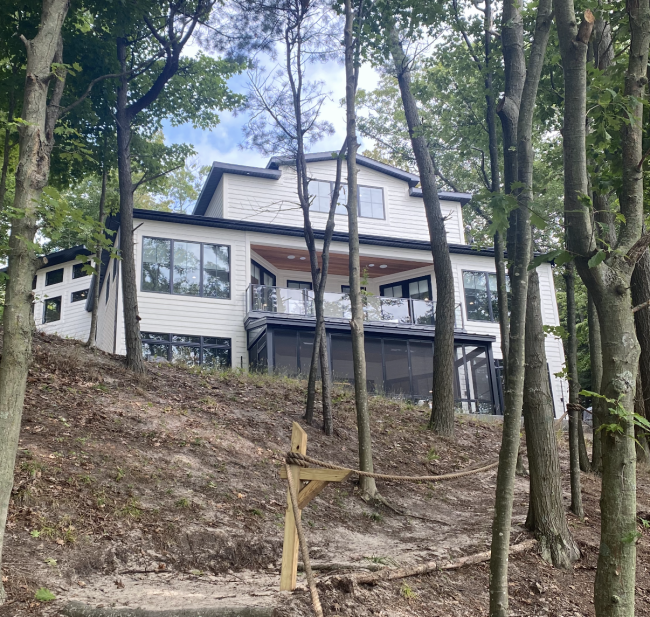
One of my favorite examples of this is a lake house we designed for a great client.
The family uses the home themselves, but they also rent it during the summer.
That created an interesting design challenge.
A babysitter, housekeeper, family member, or frequent guest will eventually learn how a home works. Someone may show them around, and after a few visits they'll become familiar with the lighting, televisions, music, and other systems.
A renter is different.
They may arrive without ever speaking to someone who knows the house.
They've driven several hours, unloaded the car, brought the kids inside, and they're simply expected to start enjoying their vacation.
That gave us a great question to design around:
Could someone who has never stepped inside this home arrive and start enjoying it without first learning how the technology works?
The Home Should Welcome You
Imagine arriving at a lake house late on a Friday night after a long drive.
The last thing you want is to pull up to a completely dark, unfamiliar house and start figuring out where the switches are.
So some of the experience begins automatically.
The home can be illuminated appropriately when people arrive, making it feel welcoming and accessible before anyone has to understand how the lighting system works.
Once they're inside, connecting to the Wi-Fi is straightforward.
The homeowner leaves a simple instruction sheet on the kitchen island with the network information.
There's nothing technologically impressive about a piece of paper sitting on a countertop.
But it's the right interface for that moment.
Guests don't need to search for a router, call the homeowner, or figure out an app. The information they need is sitting exactly where they need it.
Once connected, a carefully designed network provides strong coverage throughout the house and outside.
Want some music?
The appropriate rooms appear naturally in AirPlay on an iPhone.
Want to watch television?
The TVs use familiar streaming interfaces and simple remotes.
The renter doesn't need to know what automation platform, network equipment, amplifiers, access points, or other technology is working behind the scenes.
The guest doesn't need to learn the house before they can enjoy the house.
That's the experience we're trying to create.
Simple Doesn't Mean Unsophisticated
There's actually quite a bit happening behind the scenes of that lake house.
And I think that's an important distinction.
A home can be technologically sophisticated without being complicated to use.
In fact, some of the most important technology in a well-designed smart home may be the technology the homeowner never interacts with.
Power management is a great example.
At a lake house several hours away from our office, a parts distributor, or potentially the nearest qualified service technician, reliability becomes incredibly important.
Power outages are going to happen.
So we design around that reality.
Battery backup and intelligent power management can protect important equipment and help systems restart in the correct sequence after an interruption.
The guest doesn't need to understand any of this.
They just know the Wi-Fi works.
That's the point.
The easiest technology to use is technology you can trust.
If someone has made a significant investment in a custom home, "it usually works" isn't a luxury experience.
Reliability is part of usability.
Even the Names Matter
Simplicity can also be lost through surprisingly small decisions.
Labeling is one of them.
I've walked into systems where rooms, sources, or controls were named in ways that probably made perfect sense to whoever programmed them but made very little sense to the people actually living in the house.
Good naming should follow a predictable logic.
If a homeowner sees a room in an app, a source on a television, a button on a keypad, or a destination in an AirPlay menu, they shouldn't have to reverse-engineer what the programmer meant.
The terminology throughout the house should match the language the family naturally uses.
That's a small detail.
But confidence is often built through small details.
A Smart Home Should Automate Responsibilities, Not Choices
There's another place where smart homes can become unnecessarily complicated.
We try to make them too smart.
I love automation, but I don't think everything should happen automatically.
A smart home should take over some of the repetitive responsibilities we would otherwise have to think about every day.
Exterior lighting can come on appropriately in the evening.
Comfort controls can help maintain the right environment.
Motorized shades can respond to intense afternoon sunlight to protect furnishings and then provide privacy as evening arrives.
When everyone leaves for the day, the home can shut down media sessions and take care of things that might otherwise have been forgotten.
Those are responsibilities.
But listening to music is a choice.
Watching television is a choice.
How someone wants the interior lighting to feel at a particular moment can be a choice.
I don't want televisions randomly turning on.
I don't want music suddenly starting because the house decided it knew what someone wanted.
And I certainly don't want lights unpredictably turning on and off around people.
We're not trying to create a haunted house.
We're trying to create confidence that the home is working for you and with you rather than fighting you.
My rule is fairly simple:
Automate the responsibilities. Leave the choices to the people.
Everyone Needs to Be Part of the Conversation
This brings me back to the client who says:
"I'm not the technology person."
I don't want that person leaving the conversation.
I want to understand their day too.
Maybe they love entertaining.
When friends are coming over for dinner, they want to feel confident getting the lighting right and putting on music that creates the right atmosphere.
They don't care about the technology behind that experience.
They care about welcoming their friends.
Maybe they work from home.
Their partner might think that means they spend eight hours in the home office.
But when we actually talk to them, we discover they like taking their first calls from the kitchen nook. When the weather is nice, they work from the back patio for a few hours.
Suddenly our conversation about Wi-Fi coverage looks completely different.
That's why everyone needs to be heard.
We're not designing around technology.
We're trying to understand how people actually live and then designing technology that supports those lives.
The Technology Enthusiast Isn't the Default User
There's nothing wrong with loving technology.
Some of our clients absolutely do.
They want to know what's possible. They enjoy exploring the system. They may use advanced features that nobody else in the family ever touches.
We can give them that depth.
But that doesn't mean everyone else should have to experience the home at the same level.
A sophisticated system can have layers.
The technology enthusiast can explore deeper functionality while everyday interactions remain straightforward for everyone else.
The spouse who doesn't care about the equipment can still create a beautiful lighting scene before dinner.
A child can watch television.
A grandparent can turn on a light.
A guest can connect to Wi-Fi.
A babysitter can get music playing.
Nobody needs to become a technology enthusiast just to feel comfortable in the house.
A great smart home isn't designed for the person who understands technology best. It's designed so everyone can feel confident using it.
Confidence Eventually Becomes Curiosity
There's something interesting that happens when we get this right.
The person who originally said, "I'm not the technology person," starts using the system.
Then they stop worrying about it.
Eventually they may come back to us and say:
"I've been doing it this way. Is there a better way?"
Or:
"Could we make the house do this too?"
I love those conversations.
Because curiosity tells me we've crossed an important threshold.
That client isn't afraid of the technology anymore.
They trust it.
They understand enough of its value to start imagining what else it could do for them.
And often, that's when a system begins to expand. Maybe we add another room, extend music outside, improve the lighting, add motorized shades, or solve a completely different problem.
Expansion is often evidence of satisfaction and confidence.
The client isn't buying more technology simply because technology is exciting.
They're asking for more because the experience has earned their trust.
Design for Everyone
At Imagined Home Technology, we spend a lot of time talking about reducing friction and creating confidence.
This is what that looks like in practice.
Sometimes it's sophisticated automation.
Sometimes it's resilient power management protecting a network several hours away.
Sometimes it's giving people three different ways to accomplish the same thing.
And sometimes it's a piece of paper sitting on a kitchen island with the Wi-Fi password.
The technology doesn't have to impress the person using it.
The experience does.
A great smart home should quietly take care of the things nobody wants to manage, remain predictable when someone wants to take control, and give every person in the house a comfortable way to interact with it.
Because the ultimate measure of a smart home isn't how much technology it contains.
It's whether the people living there feel confident enough to stop thinking about the technology and start imagining what else their home could do for them.