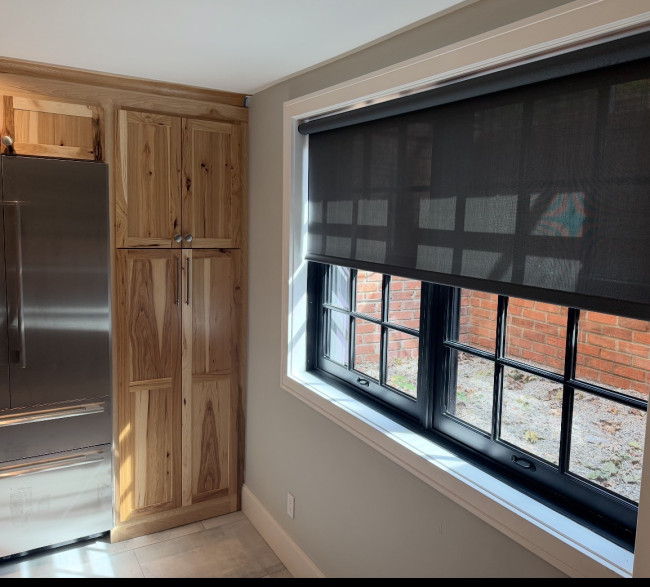
Are Motorized Shades Worth It? Why They Become Hard to Live Without
Motorized shades are one of those things that can seem almost impossible to justify the first time you see the price.
Especially when you start looking at a premium system like Lutron.
After all, we're talking about window shades. How complicated could they really need to be?
What's interesting is that I've seen the same pattern over and over again. Clients who have never lived with motorized shades often question whether they're worth the investment. Clients who have lived with them tend to make them almost a given on the next home.
I think the reason is simple.
The real value of motorized shades isn't that you can press a button and move a piece of fabric.
It's that, when they're designed correctly, you eventually stop thinking about them at all.
And when you can stop thinking about something because your home is quietly taking care of it for you, that's when a home starts to feel truly smart.
The Windows We Love Can Also Create Problems
Modern custom homes use a tremendous amount of glass.
And for good reason.
Large windows can make a room feel brighter, warmer, richer, and more connected to the landscape around it. Homeowners spend significant money on premium windows because they want sunlight and views to become part of the experience of the home.
But those same windows create challenges that aren't always obvious when you're looking at architectural plans.
We've all been in a house that gets hit with intense afternoon sun.
A beautiful room can become uncomfortable surprisingly quickly. Temperatures rise. Glare becomes distracting. And over time, direct sunlight can be hard on the flooring, furniture, cabinetry, fabrics, artwork, and other finishes homeowners spent so much time selecting.
Manual shades technically solve the problem.
But someone has to remember to use them.
That's where automation changes the experience.
Rather than asking the homeowner to manage the sun throughout the day, the home can begin to manage it for them.
Shades and Lighting Should Work Together
From an automation standpoint, I've always thought motorized shades and lighting control naturally belong together.
Both are managing light.
One controls the natural light entering the home. The other controls the light we're creating inside it.
When the two systems are designed together, the home can respond as the day changes without requiring constant input from the people living there.
The point isn't to create an elaborate schedule simply because we can.
It's to create a home that feels intentional.
Morning might mean opening shades and allowing natural light into the house.
As intense afternoon sun moves across certain windows, selected shades might adjust to protect the room and keep it comfortable.
As evening arrives, the shades can close for privacy while the lighting inside gradually becomes warmer.
The homeowner shouldn't need to think:
It's 4:00. I should probably close those shades.
Or:
It's dark outside. I need to walk around the house and close everything.
It should simply happen.
That's the difference between a house filled with smart products and a home that feels intentionally smart.
Privacy Changes Completely After Sunset
One thing homeowners often don't think about during the design process is how differently all that beautiful glass behaves at night.
During the day, large windows create a wonderful connection to the outdoors.
At night, the relationship reverses.
Once the interior lights are on, reflections and glare can make it difficult for you to see outside—but someone standing on the sidewalk or street may be able to see directly into the house.
We've worked in large custom homes that sit surprisingly close to residential streets and sidewalks. During construction, those windows feel open and beautiful. Once the family moves in, they can suddenly feel very exposed.
The right shade can almost become a security blanket.
As evening arrives, the house transitions from open and connected to the outdoors to private and comfortable for the family inside.
To me, that's something we often overlook because it's difficult to imagine exactly what living in a house will feel like while we're still looking at drawings and selections.
A beautiful home needs to work at 9:00 at night just as well as it photographs at 2:00 in the afternoon.
The Fabric Matters Just as Much as the Motor
When we design motorized shades, we're not simply selecting technology.
We're making an interior design decision.
Fabric selection needs to be deliberate.
That's why this is often an area where we want the homeowner's interior designer involved. The shade needs to complement the other selections in the home—the paint, wall coverings, flooring, millwork, stone, furniture, and architecture.
But appearance is only part of the decision.
We also need to decide how open or closed the fabric should be.
A primary bedroom or home theater may need a room-darkening or blackout solution because the goal is controlling light as completely as possible.
A great room is usually different.
If a client spent significant money creating beautiful views, I don't necessarily want the shades to make the room feel closed off every time they come down.
A more open fabric can provide privacy and reduce intense sunlight while still allowing some connection to the outdoors.
That's the balance we're looking for.
The shade should solve the problem without creating another one.
It shouldn't feel like something that was added to the room.
It should feel like it always belonged there.
Do Motorized Shades Have to Be Planned Before Construction?
Not necessarily.
This is one area where the industry has improved dramatically.
Today's battery-powered and retrofit motorized shade solutions give homeowners much more flexibility than they had in the past. If you're building a home and you're not ready to make the investment in shades during the wiring phase, that doesn't mean you've lost the opportunity forever.
But there is an important distinction between being able to add a shade later and achieving a very specific architectural result.
If you're comfortable with a beautifully installed surface-mounted shade, a retrofit solution can be an excellent option.
If you want the roller completely hidden inside a recessed pocket, integrated into custom millwork, or coordinated precisely with window casing and trim, those decisions need to happen much earlier.
At that point, shades aren't just an accessory.
They're part of the architecture.
So my advice isn't that every homeowner needs to purchase motorized shades before drywall.
It's simpler than that:
You don't necessarily need to buy the shades today. But you should understand what you might want tomorrow before the architecture eliminates your options.
Why Do Premium Motorized Shades Cost So Much?
This is where the conversation becomes very personal.
I don't believe in selling technology simply because it's considered premium.
During the early part of a project, we're always trying to understand what the homeowner actually values and what problems we're trying to solve.
Maybe privacy is extremely important.
Maybe the family has a room that gets uncomfortable every afternoon.
Maybe protecting expensive flooring and furnishings is a concern.
Maybe someone has an unusual work schedule and needs a bedroom that can become genuinely dark during the day.
Maybe the homeowner simply wants the house to take care of more things automatically.
Those needs create the value.
With a premium motorized shade system, quiet operation, consistency, reliability, fabric quality, integration, and finish all contribute to the experience.
In a custom home where someone has been incredibly deliberate about the millwork, stone, tile, wall coverings, lighting, and windows, the shades should feel like they're in the same class as everything around them.
When they move, they should move quietly and consistently.
When they're supposed to close, the homeowner should trust that they will.
And when they're not being used, they shouldn't call unnecessary attention to themselves.
That consistency creates confidence.
And confidence is a big part of what makes something feel luxurious.
You Don't Need Motorized Shades on Every Window
Motorized shades also don't have to be an all-or-nothing decision.
If a homeowner wants them but isn't ready to do the entire house, I usually start by asking where they'll make the biggest difference.
The primary suite is one of my favorite places to begin.
Sleep and recovery matter.
Schedules get disrupted. People travel. Someone works late. Someone gets sick. Sometimes you simply want to sleep in.
When you need the room dark, you want it dark.
The primary suite is also one of the places where privacy matters most, which makes automated shades especially valuable.
After that, I tend to look at the areas where the architecture is creating an obvious need.
A family room with large windows.
A foyer or other room exposed to the street.
West-facing glass getting intense afternoon sun.
Large or difficult-to-reach windows.
Those are places where shades aren't just adding a feature. They're solving a real problem.
Start with the rooms where shades improve how you live, then address the windows where sunlight or privacy creates the greatest challenge.
You can always expand later.
So, Are Motorized Shades Worth It?
For every homeowner?
Probably not.
If you don't have a problem with sunlight, aren't concerned about privacy, enjoy operating manual window treatments, and don't care whether the shades participate in your home's automation, there may be better places to invest.
But for the right homeowner, they're one of those technologies whose value becomes much easier to understand after living with them.
They help protect the home.
They create privacy.
They improve sleep.
They manage glare and heat.
They complement the lighting.
And they quietly remove another small responsibility from everyday life.
Sometimes success is a client telling us:
"I love these shades. I'm never building another house without them."
I love hearing that.
But there's another version of success I like just as much.
A client tells us how comfortable their home feels.
How private it feels at night.
How everything seems to work without much thought.
They may not mention the shades at all.
That's okay.
Because the product was never supposed to be the experience.
The product was supposed to help create the experience.
At Imagined Home Technology, we talk a lot about making technology disappear into everyday life.
Motorized shades are one of the clearest examples of what that can mean.
When sunlight changes, the home responds.
When evening arrives, the home becomes private.
When you need to sleep, the room becomes dark.
And most days, you don't think about any of it.
Confidence and comfort are luxury.
And sometimes the smartest technology in the house is the technology you barely notice anymore.