How Long Should a Smart Home Last? Why We Design for Adaptation Instead of "Future-Proofing"
One of the most common questions I hear from homeowners is:
"How long should a smart home last?"
It's a fair question, but I usually respond with one of my own.
"Which part of the smart home are we talking about?"
A smart home isn't a single product. It's a collection of systems that all serve different purposes and evolve at different rates. Some are long-term investments that should last decades. Others are designed to evolve as technology improves and your family's needs change.
Understanding the difference is one of the most important parts of planning a home that you'll continue to enjoy for years to come.
Not Every Part of a Smart Home Ages the Same Way
One of the biggest misconceptions about smart home technology is that everything becomes obsolete at the same time.
That's simply not how it works.
Think about the technology in layers.
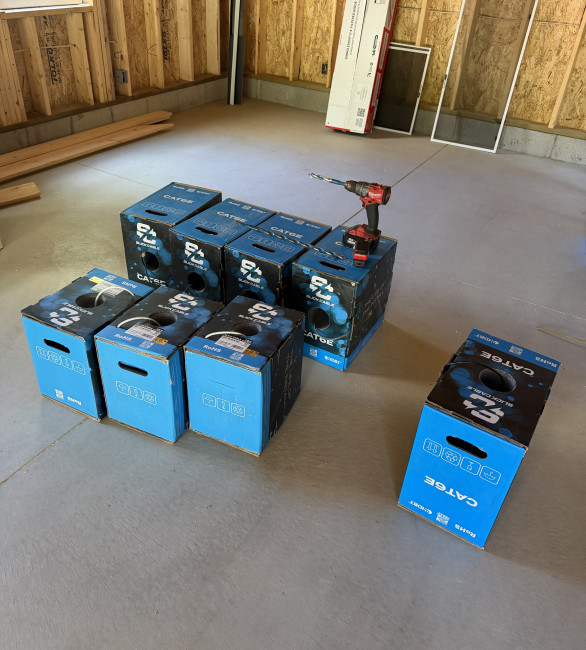
Your infrastructure things like wiring, speakers, lighting circuits, equipment locations, and pathways between utility rooms is often designed to last for decades. These are the foundations of the system and, when planned correctly, they rarely need to be replaced.
Other systems naturally evolve over time.
Your network may be upgraded more frequently as internet speeds increase and new Wi-Fi standards emerge. Control systems like Control4 or Josh AI often have clean upgrade paths that allow you to improve performance without rebuilding the entire system. Televisions may last for many years, but some homeowners choose to upgrade simply because display technology continues to improve.
Each system has its own life cycle.
The goal isn't making everything last forever.
The goal is making everything easy to evolve.
We Don't Believe in "Future-Proofing." We Believe in Designing for Adaptation.
The phrase "future-proof" gets used a lot in our industry.
The truth is, nothing is completely future-proof.
Technology will continue to change, just as it always has.
Instead of promising that today's products will never become outdated, we focus on something more practical.
We design for adaptation.
That means creating a home with the infrastructure, flexibility, and planning that allows technology to grow alongside your family instead of forcing you to start over every time something changes.
A well-designed smart home shouldn't resist change.
It should welcome it.
Your Home Will Change Your Technology Should Be Ready
One thing I've learned after nearly twenty years designing smart home systems is that most homes continue to evolve long after move-in day.
Within the first year, homeowners often discover small improvements they didn't think about during construction.
A few years later, many finish the basement, build an outdoor entertainment space, install a pool, add landscape lighting, or renovate another area of the home.
Those aren't unusual projects.
They're a natural part of living in a home.
When the original infrastructure is thoughtfully designed, those additions become exciting opportunities instead of expensive obstacles.
Adding another television, expanding the audio system, improving outdoor Wi-Fi, or integrating new lighting shouldn't feel like starting from scratch.
They should feel like the next chapter.
The Best Investment Is Flexibility
One of the most valuable investments we make during construction often isn't a product at all.
It's flexibility.
Sometimes that means installing an extra conduit while the walls are open.
Sometimes it's running additional network cable to a future outdoor space.
Sometimes it's creating a pathway between equipment rooms that may not be needed for years.
Those decisions don't always provide an immediate return.
But when life changes and it always does they can save significant time, reduce construction costs, and make future upgrades dramatically easier.
Planning ahead isn't about predicting the future.
It's about giving yourself options when the future arrives.
Your Technology Partner Should Grow With Your Home
One of the best things a homeowner can do before starting a renovation or addition is call their technology partner early.
The conversation is remarkably similar to building the home in the first place.
The earlier we're involved, the more opportunities we have to simplify the project.
Because we've often worked in the home before, we already understand how the systems were designed. In many cases, we remember what the home looked like before the drywall was installed. We may even have photographs that document wiring paths, conduit locations, equipment layouts, and other details that are now hidden behind finished walls.
That history becomes incredibly valuable.
Instead of guessing what's possible, we can make informed recommendations that save time, reduce uncertainty, and create a better outcome.
Technology Should Evolve With Your Lifestyle
One of our philosophies at Imagined Home Technology is that technology should improve the way you live not become something you worry about replacing every few years.
The best smart homes aren't static.
They're living systems.
As your family grows, your routines change, and technology improves, your home should be able to adapt right alongside you.
That's why we think about every project as the beginning of a long-term relationship rather than a one-time installation.
Because great technology isn't defined by how long it stays exactly the same.
It's defined by how gracefully it grows with you.
The Longest-Lasting Smart Homes Are the Ones That Can Adapt
So, how long should a smart home last?
The answer isn't five years.
It isn't ten years.
And it certainly isn't forever.
A thoughtfully designed smart home should continue evolving for decades.
Some components will stay in place for twenty years or more.
Others will naturally be upgraded as technology improves.
That's exactly how it should work.
The goal isn't to build a home that never changes.
The goal is to build one that's ready when it does.
Because the smartest investment you can make isn't trying to predict the future.
It's designing a home that's ready to adapt to it.