The Best Technology Decisions Happen Before Anyone Talks About Technology
When most people think about a smart home technology company, they picture the end of the project TVs on the wall, speakers in the ceiling, beautiful lighting control, and a finished home theater. From the outside, it looks like our work begins once the house is framed and it's time to install equipment.
In reality, the most important technology decisions happen long before that.
After nearly twenty years working on custom homes throughout Southeast Michigan, I've learned that the best projects rarely begin with products. They begin with better questions.
Every Custom Home Is Still Being Designed
One of the biggest misconceptions about building a custom home is that everything is decided before construction begins. In reality, great homes continue to evolve throughout the project. Interior designers refine finishes, architects adjust details, builders solve challenges in the field, and homeowners discover new ideas as they begin walking through the space.
That's exactly how custom homes should work.
Some of the best ideas don't exist on day one. The challenge is making sure those ideas don't collide with decisions that were made months earlier. A thoughtful technology partner helps anticipate those moments before they become expensive problems.
The Right Questions Matter More Than the Right Products
When I walk onto a project, I'm rarely thinking about which television, speaker, or automation platform we're going to install first. Instead, I'm asking questions.
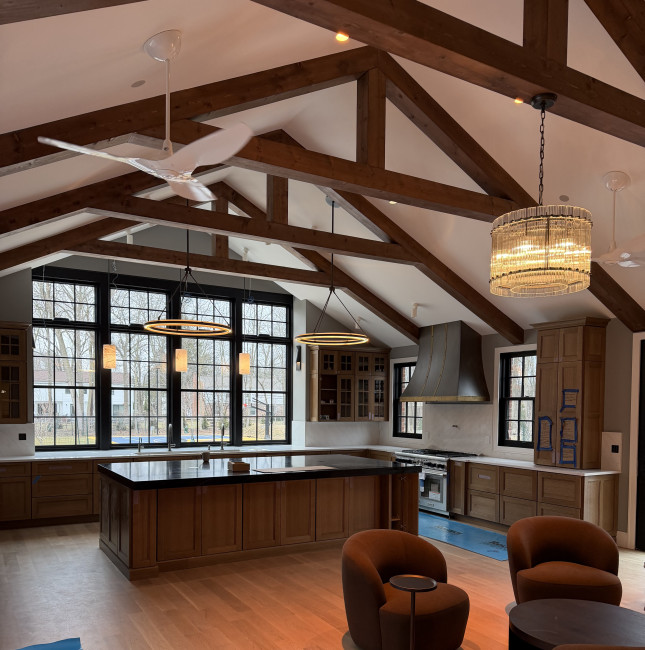
Will this ceiling have beams?
Is the millwork finalized?
Will cabinetry affect the TV location?
Has the lighting design been completed?
How does this family actually plan to live in this space?
Those conversations determine whether technology quietly blends into the architecture or becomes something everyone has to work around. If we know decorative ceiling details are coming, we can coordinate speaker placement before framing is complete. If cabinetry is still evolving, we can plan television locations that complement the room instead of competing with it. If lighting control is part of the design, we can coordinate keypad locations before drywall ever goes up.
The products matter.
The questions matter more.
The Most Expensive Mistakes Usually Start With One Missed Conversation
Every custom home has change orders. In fact, some of my favorite conversations happen when a homeowner gets inspired halfway through a project.
"Wouldn't it be amazing if we added music to the patio?"
"Now that I see this room, I think automated shades would be incredible."
Those are exciting changes because they're making the home better.
The change orders we try to avoid are the ones caused by missed planning. A Wi-Fi access point ends up in the middle of a beautifully paneled ceiling. A speaker conflicts with decorative beams. A television no longer fits because the millwork changed. Someone has to cut into a finished Level 5 ceiling because the proper pathway wasn't planned before drywall.
Those aren't creative decisions.
They're expensive corrections.
Our philosophy is simple: if a project changes, it should be because we're creating something even better not because someone forgot to ask the right question.
Technology Should Support the Project Not Compete With It
One of the biggest compliments a builder can give us is that we helped keep the project moving.
We never want to be the trade that delays construction, creates unnecessary change orders, or forces other trades to redo their work. Our role is to coordinate with the builder, architect, interior designer, electrician, and homeowner so the technology becomes a seamless part of the overall vision.
Technology should serve the project.
It should never become the project.
Every Recommendation Starts With the Family
One of the biggest differences in our approach at Imagined Home Technology is that we don't begin with products.
We begin with people.
How does this family entertain?
Where do they naturally gather?
Do they work from home?
Do they have young children?
What spaces are most important to them?
Once we understand those answers, the technology decisions become much easier. Instead of recommending products because they're popular, we recommend solutions that support the family's lifestyle and make their home easier to enjoy.
That's what great smart home technology should do.
Experience Is Knowing Which Questions to Ask
Over the course of my career, I've made expensive mistakes.
Every experienced professional has.
Those mistakes taught me something far more valuable than any product training ever could. Today, I spend less time thinking about equipment and more time looking for the places where decisions might collide six months from now.
To me, that's what experience really is.
It's not having every answer.
It's knowing which questions need to be asked while there's still time to change the outcome.
The Best Projects Become Long-Term Relationships
The projects I'm most proud of aren't defined by the equipment we installed.
They're defined by the relationships that continue long after move-in.
The builder who calls us before the next project even starts.
The interior designer who wants our input before finalizing a ceiling detail.
The homeowner who reaches out a year later because they have another idea and trust us to help bring it to life.
That's what we're building at Imagined Home Technology.
Not just smart homes.
Long-term partnerships built on thoughtful planning, clear communication, and trust.
Because in the end, the best technology decisions don't happen because someone picked the right products.
They happen because the right questions were asked before anyone was forced to live with the wrong ones.