How Much Does Smart Home Technology Cost in a Custom Home?
If you are building a custom home in Birmingham, Bloomfield Hills, Northville, Plymouth, Grosse Pointe, or anywhere throughout Southeast Michigan, one of the most common questions you will ask is:
How much does smart home technology cost?
The honest answer is: it depends on the scope.
Before I give a number, I usually want to understand how you plan to use the home. How many rooms are involved? What systems matter most to you? What kind of experience are you trying to create?
Once we go through that, I can usually give a range that is pretty accurate.
Why It’s Hard to Give One Number
Every custom home is different.
Some clients want a few key areas done really well. Others want the entire home integrated with lighting, music, Wi-Fi, and control. Some want high-end finishes where technology disappears into the design. Others are more focused on function.
That is why I prefer to give a range instead of a single number.
In higher-end custom homes, a typical starting point might look like:
- Lower scope: $30,000–$50,000
- Mid-range: $70,000–$100,000
- Higher-end: $100,000–$150,000+
These ranges are usually driven by how many rooms are being covered and what systems are included.
When a full lighting system is part of the design, those numbers can increase significantly. In some cases, lighting alone can double the total investment.
For more complex spaces like theaters or large outdoor areas, I prefer to break those out as separate systems so they get the attention they deserve.
What Actually Drives the Cost?
Most people assume cost is driven by expensive equipment.
In reality, it is driven by how much of the home you want the technology to support.
1. Number of rooms and areas
This is one of the biggest factors.
You can design around:
- key spaces (kitchen, living room, primary suite, outdoor areas), or
- full floors, or
- the entire home
Each step up increases cost, but also increases consistency and ease of use.
2. Number of windows (for shades)
Motorized shades scale quickly.
Cost is usually based on:
- number of windows
- size of windows
- installation complexity
- whether custom pockets are required
3. Level of finish
This is where a lot of custom homes separate themselves.
I tend to talk about fit and finish more than raw performance.
For example:
- Standard in-ceiling speakers vs.
- Invisible or ultra-discreet speakers
The higher-end aesthetic options can be 2–3x the cost, but they integrate much better into the design.
The same idea applies to:
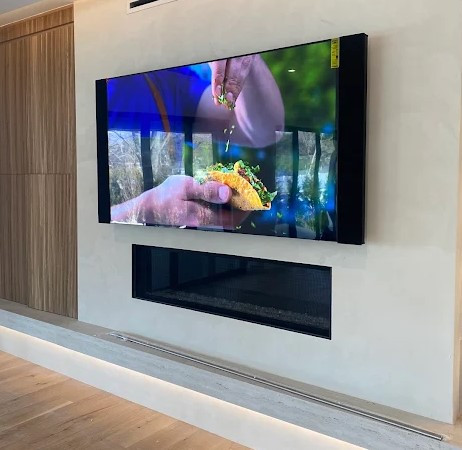
- TVs
- lighting keypads
- hidden equipment
- architectural integration
In a custom home, how technology looks matters just as much as how it performs.
4. Types of systems included
Common systems include:
- network / Wi-Fi
- audio
- video
- lighting control
- motorized shades
- cameras / security
- control systems
The more systems you include, the more coordination and infrastructure is required.
5. Outdoor spaces and specialty areas
Outdoor areas are often underestimated.
Patios, pools, cabanas, detached garages, and guest houses may require:
- additional wiring
- conduit
- sometimes fiber
- weather-rated equipment
Specialty spaces like theaters should almost always be treated as separate systems so they are done correctly.
6. Planning for flexibility
We usually design systems with some headroom so you can expand later.
That allows you to:
- add audio zones
- expand network coverage
- adjust systems
without having to start over.
Prewire vs. Finished System
One important distinction is between preparing the home and fully finishing every system.
You do not need to buy everything on day one.
Prewire allows you to:
- run infrastructure
- protect future options
- avoid tearing into finished spaces later
The finished system is what activates the experience.
That approach helps control budget while keeping future flexibility.
How We Help Clients Prioritize
One of the biggest parts of our job is helping clients decide what to do now versus what can wait.
My general approach is simple.
If something needs to be integrated into the design, it should be done now.
That usually applies to the major areas of the home:
- kitchens
- patios
- main living spaces
- offices
- primary suites
These are the spaces where clients spend the most time and where the experience matters most.
Side rooms or secondary spaces are often a good place to reduce scope. In those areas, we can run wiring and leave options open without fully building everything out.
That balance helps prevent both overspending and underbuilding.
We never want a client to feel like they missed an opportunity or that something does not feel right after the home is finished.
Avoiding Decision Fatigue
Building a custom home comes with a lot of decisions.
Our goal is to make the technology side feel easier, not more overwhelming.
Some clients want to be very involved in every decision. Others want us to understand the vision, figure it out, and deliver the result.
We are comfortable with both.
We think of ourselves as a technology concierge.
The goal is to give you the right level of guidance so you can get what you want without the process becoming stressful.
Final Thought
The biggest driver of cost is not the equipment.
It is how much of the home you want the technology to support and how intentional you want the experience to feel.
A few well-designed spaces will always feel better than trying to do everything at once.
And the earlier the planning starts, the more control you have over both cost and outcome.
If you are building a custom home in Southeast Michigan, the best thing you can do is start the conversation early, understand your priorities, and build a plan that fits the way you want to live in the home.